Near record high cost of diesel hits farmers at harvest; new orders offer partial relief
By Wyoming News Exchange
October 10, 2026
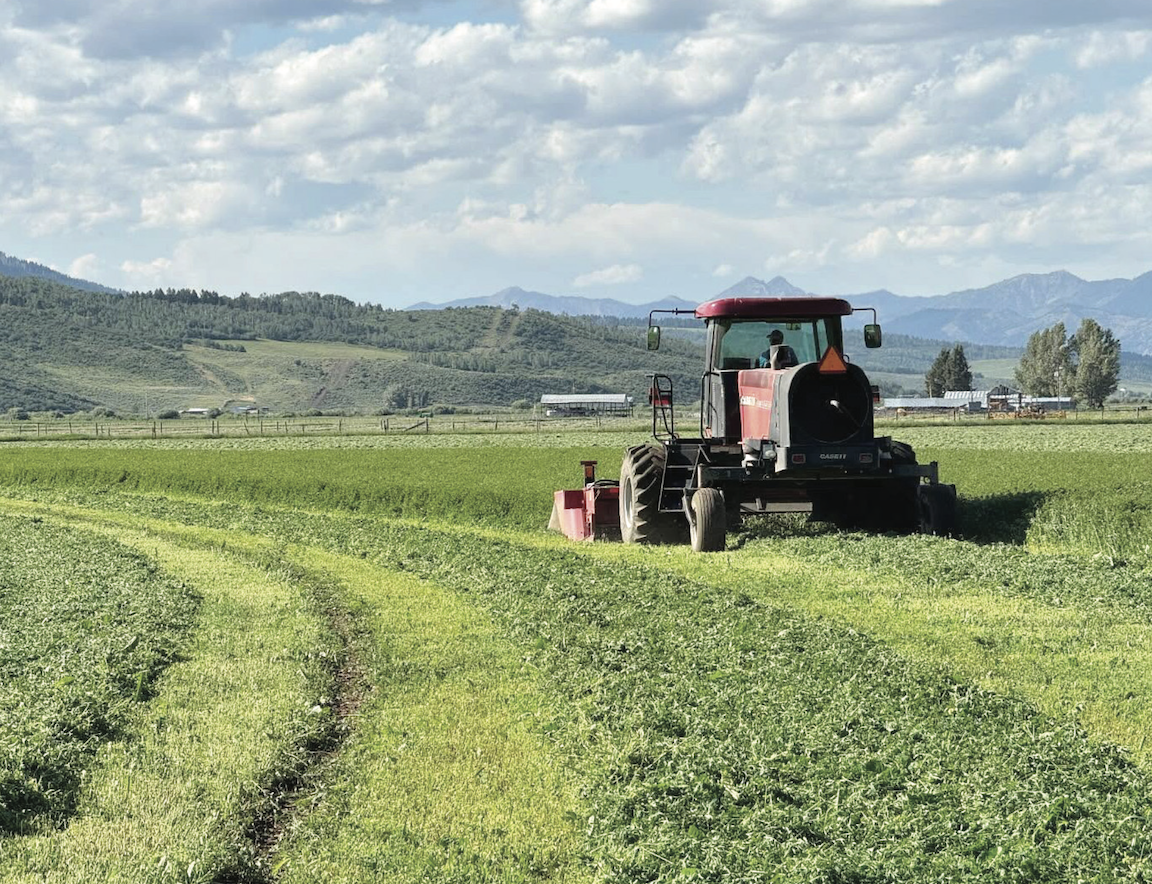
PHOTO/KYLE WEBER
By Ryan Dickey
Torrington Telegram
Via- Wyoming News Exchange
TORRINGTON – Farmers and ranchers across Wyoming, Nebraska and Colorado are bringing in this fall’s crops with diesel prices still close to the record highs set in September.
Nebraska has issued state orders and President Donald Trump signed a federal order Oct. 5 aimed at easing the cost, but the help covers only part of the bill, and as of Wednesday the federal piece was still waiting on Treasury guidance.
Diesel prices at Torrington pumps Wednesday ranged from $5.75 to $5.89 a gallon. Thrifty’s listed diesel at $5.86 at noon, the Cenex posted $5.75 and the Westco listed a cash price of $5.89 that morning. That is roughly 30 to 45 cents below Wyoming’s average of $6.20 a gallon, the most recent figure AAA had posted, dated Oct. 6. A year earlier, the state average was $3.53.
Across the state lines, AAA put Nebraska’s average at $5.97 on Oct. 7, up from $3.36 a year earlier. Colorado’s was $6.05, up from $3.41.
The national average price of diesel hit a record $6.53 a gallon Sept. 22, up from $3.76 before the war with Iran began, according to AAA figures reported by CNN. It stood at $6.30 on Oct. 7, according to AAA.
State averages tell the same story.
Wyoming’s reached a record $6.28 on Sept. 24, according to AAA. Nebraska Gov. Jim Pillen put his state’s at a record $6.21 in a Sept. 24 letter to Trump. Colorado’s reached a record $6.22 on Sept. 22.
Reports point to several causes: the war with Iran and disrupted tanker traffic through the Strait of Hormuz, refinery outages tied to conflicts in the Middle East and Ukraine, and tight refining capacity worldwide. The White House cited the Russia-Ukraine war and limited refining capacity.
The timing is hard on agriculture. Harvest is the most fuel-intensive stretch of the farm year, with combines, grain carts and trucks running at once, and the spike lands on top of higher costs for fertilizer, seed and equipment, the AP reported.
Wyoming
Wilma Tope, who ranches with her husband, Jay, near Aladdin in northeastern Wyoming, told Wyoming Public Media that her receipts show dyed diesel at $2.89 a gallon a year ago, a price that held until the Iran war began. Fuel has since more than doubled, she said, and it is among the ranch’s largest operating expenses.
The drought has made it worse.
A dam near Devils Tower that had not gone dry since the 1960s is empty this year, so the couple could not graze that land. Tope skipped fertilizer because of the price, cut her herd and moved some cows to Montana. She added that hay costs have climbed with the drought and higher hauling charges.
Wyoming had no diesel-specific relief as of Wyoming Public Media’s Sept. 25 report, and the Telegram found no announcement of any as of Wednesday. The closest step was Gov. Mark Gordon’s executive order authorizing emergency permits for oversize and overweight loads of hay and livestock feed, which he extended because of drought and wildfires, not fuel costs.
Colorado
Kreg Vollmer, a Fort Morgan farmer and Colorado Farm Bureau board member, told 9NEWS that nearly every part of his operation is touched by higher diesel and gasoline prices.
Colorado was not among the states listed in an AP round-up of state relief actions on Oct. 2, which described its list as covering some of the states that have acted.
Nebraska
Nebraska moved first among the three states.
On Sept. 24, Pillen signed two executive orders. One suspends the state diesel tax for 90 days for vehicles hauling seasonal farm products or livestock, with producers keeping fuel receipts to claim refunds, and lets highway-registered vehicles hold, sell or use untaxed dyed diesel without state penalties, according to States Newsroom.
The other raises maximum weight limits for those loads by up to 25%, with no extra permits or fees.
“Is it a game changer? No, but it makes a difference,” Pillen said, according to Nebraska Public Media. The state is prepared to extend the orders another 90 days if needed.
Nebraska Department of Agriculture Director Sherry Vinton said row-crop farmers face historic profitability challenges because of rising input costs, and ranchers are hauling record amounts of feed after this year’s wildfires.
The federal order
On Oct. 5, Trump signed an executive order at a campaign rally in Grand Island, Nebraska, aimed at letting red-dyed diesel be used on highways through Dec.31. Dyed diesel is normally limited to off-road uses such as farming, and using it on the road can bring federal penalties. The order does not eliminate the 24.4- cent federal diesel tax, and it does not by itself open access to every driver. It directs the IRS to announce within five days that it will not impose those penalties on highway sales or use during the period.
It also gives the Treasury Department five days to decide whether the law allows the tax on that fuel to be deferred, without interest or penalties. The Treasury’s guidance is to spell out who is covered and under what conditions, and as of Wednesday trucking groups said they were waiting for it. The Telegram found no published IRS or Treasury guidance by then.
The White House put the federal savings at about $60 on a 250-gallon fill and said it would be higher where states take matching action. The USDA estimated about $640 million in combined federal and state savings across roughly 224.6 million harvested acres. The order encourages states to act but does not change state taxes.
The order does not address diesel exports, which Pillen had asked Trump to pause for 90 days. The administration floated an export ban in late September then scaled it back after criticism from oil and gas executives, Wyoming Public Media reported.
Wyoming U.S. Sen.Cynthia Lummis opposed the idea, according to Cowboy State Daily.
The American Farm Bureau Federation applauded the order, saying every cent per gallon matters to farmers running grain trucks and hauling cattle long distances.
Others are more cautious.
A GasBuddy analyst said before the order that it could save on-road users money but not farmers, who already buy dyed diesel for farm equipment. The Owner-Operator Independent Drivers Association said wider use of red-dyed diesel would provide minimal relief, Trucking Dive reported.
Some analysts also warn that a surge of highway buyers could strain dyed diesel supplies during harvest, Time reported. Gilbert Metcalf, a visiting professor at MIT Sloan and former Treasury official, told Fortune the order would not bring more diesel to market and could make dyed diesel more expensive for farmers and other off-road users.
What’s next
The Treasury’s five-day deadline falls on or about Saturday, Oct. 10. If relief is granted, it ends Dec. 31, and Nebraska’s orders run 90 days unless extended. One market analysis noted that lasting relief still depends on physical diesel supply, not just tax rules.
The above story may be used ONLY by members of the Wyoming News Exchange or with the express consent of the newspaper of its origin.