Lawmakers, local leaders explore taxes, water policy, economic development
By Wyoming News Exchange
June 11, 2026
By Rachel Finch
Laramie Boomerang
Via- Wyoming News Exchange
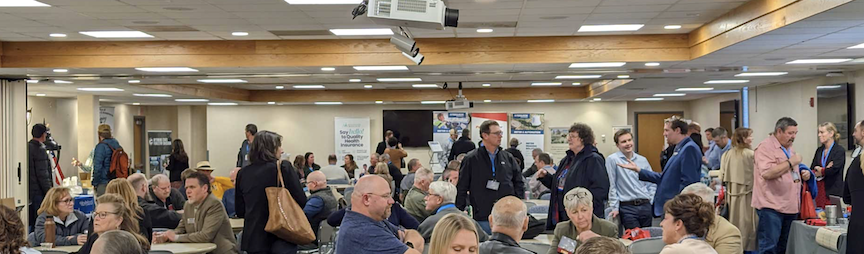
LARAMIE — State lawmakers and municipal leaders closed out the 2026 Wyoming Association of Municipalities Summer Conference with a wide-ranging discussion on Friday about local government funding, water, housing, economic development and the balance between state and local control.
The legislative panel brought together lawmakers and municipal officials for the final session of the three-day conference, which was hosted in Laramie and focused on issues facing Wyoming’s 99 cities and towns.
The panel featured Sen. Bo Biteman, R-Ranchester; Rep. Ken Chestek, D-Laramie; Sen. Gary Crum, R-Laramie; Rep. Justin Fornstrom, R-Gillette; Rep. Rob Geringer, R-Cheyenne; Sen.
Taft Love, R-Big Horn; Rep. Karlee Provenza, D-Laramie; and Rep. Trey Sherwood, D-Laramie.
“This is probably one of the most important panels we have for this conference because this group has been very instrumental in working together as state leaders with our local leaders,” Wyoming Association of Municipalities Executive Director and moderator Ashley Harpstreith said. “So, I am really pleased to have this group with us today. … I work with all of this group here and they have been great advocates of our behalf in changing the local government.”
Much of the conversation focused on local government finances as lawmakers continue debating property tax reform and long-term municipal funding.
Biteman highlighted House Bill 107, approved earlier this year, which establishes a formula for distributing a portion of statewide sales and use tax revenue to cities, towns and counties. He noted that many municipal leaders have praised the legislation for creating a more predictable source of revenue than the previous system.
Lawmakers also discussed the challenge of balancing taxpayer concerns with the need to maintain local services and infrastructure.
Chestek outlined a proposal he plans to bring before the Joint Revenue Committee that would establish base-year assessments, in which property values would be reassessed and then locked in for a set number of years. While property valuations would remain stable during that period, local governments would retain the ability to adjust mill levies to account for inflation and service needs.
“This would delegate to the local government the power to set up mills, to raise the revenue needed to do the services that you need,” Chestek said. “Those decisions should be made at the local level, you’re the ones who balance the taxes with the services. It’s a balancing action and who better to make those choices than the local government? You’re closest to the people.”
Local control of the infrastructure
Water, housing and infrastructure also emerged as major topics during the discussion, with lawmakers examining how state policy can support communities experiencing growth while preserving local decision-making authority.
Love discussed ongoing groundwater studies and efforts to better understand Wyoming’s long-term water resources as communities continue to grow.
“This is going to be really important as we watch our community sprawl around the towns,” he said. “And we need to know and be cognizant of what we’re doing and use public sewer and water districts appropriately, so that we can minimize the number of straws we’re poking in the ground and maximize the density of housing.”
The discussion also touched on stormwater infrastructure and ongoing efforts to develop funding mechanisms for major municipal projects.
“One thing that I must say I was a bit caught off guard by was the big controversy on the stormwater fees,” Chestek said. “I think that was my fault because I wasn’t paying as close attention to the (Laramie) city council meetings as I should have. So, when I started getting inquiries from people about that, I had to say, ‘I have no idea.’ I had a lot of catching up to do.
I think it’s a pretty simple fix and we have some good ideas about how to fix it. We’ll start work on that.”
Economic development and communication
Also discussed was the future of economic development in Wyoming, including ongoing conversations about the Wyoming Business Council and the role state government should play in supporting local communities.
“Why is Wyoming the only state in our surrounding states that is shrinking?” Crum asked. “Colorado’s growing, Utah’s growing, Idaho’s growing, Montana’s growing, South Dakota’s growing … So why is Wyoming the only state in our surrounding states that is not growing? We’ve got the best minerals. We’ve got good transportation. We say we’re open for business. Yet we’re shrinking. Why?”
Crum added that economic development efforts are most effective when driven at the local level, with the state serving as a partner by providing resources, support and connections.
He said Wyoming should do a better job of promoting its communities, supporting local businesses and helping connect prospective employers with local economic development organizations.
“One thing I don’t think the business council’s done a great job of is being an advocate for us,” Crum said. “… The University of Wyoming can and should be the number one driver in the state. With the people that come out of the university, with the resources they have, the business council ought to be standing up and saying, ‘These guys are doing great work.’ Yes, we can all improve and do things better, but we’re doing good right now. … I think we need to get economic development focused on projects advocating for our local businesses.”
Sherwood offered a different perspective on the Wyoming Business Council, emphasizing the value of its support for local communities. She said the organization has helped build local leadership capacity, provide technical assistance and fund community-driven projects that many towns would have struggled to complete on their own.
As the discussion concluded, lawmakers repeatedly returned to the importance of communication between municipalities and legislators, encouraging local officials to engage lawmakers early and often.
“I think that local governments are doing their due diligence to get the information out,” Provenza said. “I think the breakdown is in our communities. We don’t have as much community space. We’re isolated from each other. We’re not spending time together.
“That’s not necessarily (local governments’) fault,” she continued, “but we have to figure out how we can help build a community so people know what’s going on (and) that there’s a development proposal that they need to show up for and that we’re reaching them where they are.”
The above story may be used ONLY by members of the Wyoming News Exchange or with the express consent of the newspaper of its origin.