
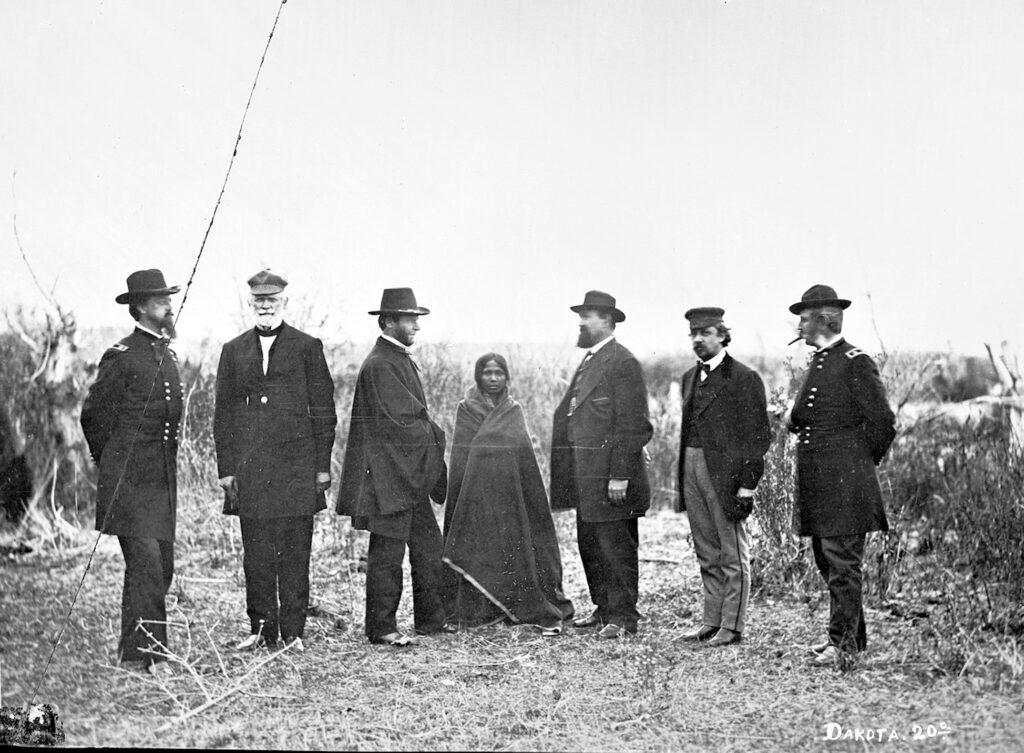
• Who was the small native girl posing with six white officials in 1868? That question sent historian Sandweiss digging for answers.
By Katie Klingsporn, WyoFile.com
They say a picture is worth a thousand words.
For historian and professor Martha Sandweiss, however, one particular image, taken 158 years ago at Fort Laramie, was worth 140,000 of them. She wrote an entire book about it, unraveling an untold narrative about a native girl on the plains.
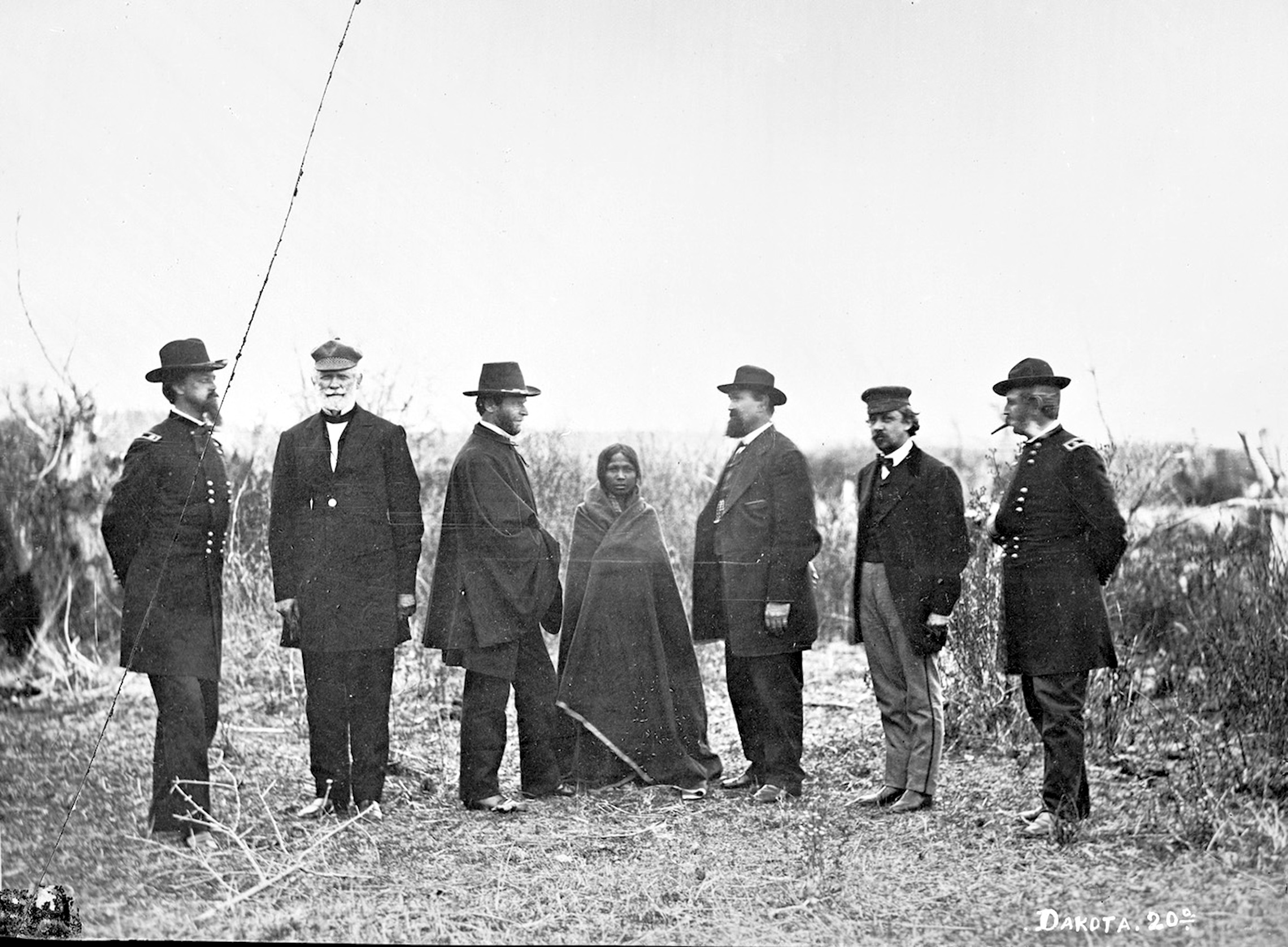
The photo in question depicts six white men, all members of the United State’s Indian Peace Commission, who had been dispatched west by Congress “to establish peace with certain hostile Indian tribes” — with a goal of moving tribes to reservations.
They stand at Fort Laramie, a major frontier outpost in the Wyoming Territory, six severe figures flanking a small native girl wrapped in a blanket.
At the time Sandweiss first laid eyes on the picture, which acclaimed Civil War-era photographer Alexander Gardner made using the wet plate collodion process, the identities of the six men were well known. But the girl?
She was nameless, Sandweiss explained during a recent presentation in Cheyenne.
“And my project started with the simplest question: Could I figure out who she is?” said Sandweiss, professor emerita of history at Princeton University. Historians typically set out to explain things like events, she said, acknowledging that her approach was unorthodox. But it was ultimately fruitful.
“I love digging deep for those little stories, and this photo turns out to have a lot of them,” she said. “I would eventually learn there’s an incredible span of American history here.”
A clue in the Fort Laramie archives led her to Pine Ridge, South Dakota, where she eventually tracked down descendents of the woman and learned that her name was Sophie Mousseau.
In the process, Sandweiss happened across stories of brutal massacres at the hands of U.S. officers, blended families with French Canadian bloodlines and personal betrayals. The timeline of events she studied began in 1800 and stretched until 1936, resulting in her latest book, “Girl in the Middle: A Recovered History of the American West.”
It provided further evidence, she said, that “everyone’s story matters. It’s not just the well-known military men who could illuminate the past for us. Sophie matters too. The Sophies of the world matter too.”
WyoFile is an independent nonprofit news organization focused on Wyoming people, places and policy.
The above story may be used ONLY by members of the Wyoming News Exchange or with the express consent of the newspaper of its origin.